-
Your Weekly LGBTSr Humorscope:

For the week ahead, according to the stars… and a strong hunch.
♈ Aries
You’re feeling motivated this week, which is great, just try not to apply that energy to other people’s lives. Focus on your to-do list.
♉ Taurus
This is a comfort-seeking week. Rewatch something familiar, cook something easy, wear something soft. The universe fully supports pants with elastic waistbands.
♊ Gemini
You’ve got a lot to say this week, but practice listening without planning your response. A casual conversation could turn into an unexpected connection.
♋ Cancer
Feelings are floating close to the surface. You may find yourself reminiscing or reaching out to someone from the past. If it feels warm, lean in. If it feels heavy, let it drift by.
-
The Twist Podcast 317: Good News Roundup, AI Shaming, and Our Weekly Recommendations
In Episode 317 of The Twist Podcast, co-hosts Mark McNease and Rick Rose freshen the air with a good news roundup, a conversation about AI shaming, and our weekly recommendations for TV, books and culture.
We dig into why good news matters more than ever, how technology is shaping the way we judge ourselves and others, and what’s worth your time right now if you’re looking for something smart, entertaining, or just plain comforting. As always, the conversation is curious, candid, and just the right amount of off-the-rails.
Find us on YouTube, Spotify, Audible, and wherever you listen to your favorite shows. If you enjoy the episode, be sure to subscribe, rate, and share—it really helps keep the conversation going.
-
From the Book Bin: Chuck Wendig’s Stairway to Horror

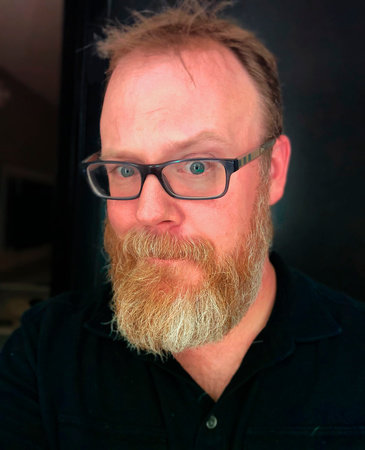
By Mark McNeaseI’ve been a fan of Chuck Wendig’s ever since I read his fantastic Black River Orchard. He writes what I call literary horror, something I aspire to myself. He also lives not far from here, but I don’t know where. I just recognize Bucks County, PA, and the towns he uses in his stories – some real and some fictional. I also really like his blog Terrible Minds, where he reviews apples, talks about writing, and offers his sometimes bleak critiques of a world spiraling into madness. I’m currently reading his latest book, The Staircase in the Woods (April, 2025). It’s another knockout, and this week’s choice from the Book Bin.
But first, About Chuck Wendig in his own words
Wait, Who The Hell Is This Guy?
Chuck Wendig is the New York Times bestselling author of Wanderers, The Book of Accidents, Wayward, Black River Orchard, and more than two dozen other books for adults and young adults. A finalist for the Astounding Award and an alumnus of the Sundance Screenwriters Lab, he has also written for comics, games, film, and television. He’s known for his popular blog, terribleminds, and books about writing such as Damn Fine Story. He lives in Bucks County, Pennsylvania, with his family.
Terribleminds is his blog. Here he rambles on about writing, parenthood, food, pop culture, and other such shenanigans. It is NSFW and NSFL.
-
A Twist Podcast Bonus Interview with Audiobook Narrator Daniela Acitelli
I had the pleasure of interviewing audiobook narrator and friend Daniela Acitelli, whose narration of three of my books is a highlight of the audiobook experience for me. We talked about her craft, her journey, and her life as an American ex-pat in London.
Daniela is an accomplished voice actor and narrator whose work is defined by clarity, emotional intelligence, and an instinctive feel for story.
What truly sets Daniela apart is her versatility and respect for the author’s voice. She approaches each project as a collaboration, shaping tone and character with care while remaining faithful to the intent of the material. She’s as much as part of my books now as the characters themselves. Listen in to our casual conversation.
-
This Week’s Fun Facts: Taking a Bite Out of Teeth

Having just had a dental mini-crisis, I thought it would be fun to learn a few things about teeth.
- Your teeth are the only part of your body that can’t heal themselves.
Bones can mend, skin can regenerate—but once tooth enamel is damaged, it’s gone for good. - Tooth enamel is the hardest substance in the human body.
It’s even stronger than bone. - Everyone’s teeth are as unique as fingerprints.
Tooth shape, spacing, and alignment are so individual that dental records can be used to identify a corpse. - You start forming teeth before you’re even born.
Baby teeth begin developing in the womb—even though they don’t show up for months (or years). -
George Washington didn’t have wooden teeth
Despite the myth, his dentures were made from a mix of human teeth, animal teeth, and ivory. -
Early dentures were literally spring-loaded
In the 1700s, some false teeth were held together with metal springs that forced the mouth open. Wearers had to clench constantly to keep their mouths closed. - Snails have thousands of teeth.
They’re tiny and arranged on a ribbon-like tongue called a radula. Some species have over 20,000 microscopic teeth, making them toothier than any mammal on Earth. - Sharks never run out of teeth.
Most sharks grow and shed teeth constantly—some replace a lost tooth in as little as 24 hours.
- Your teeth are the only part of your body that can’t heal themselves.
-
Health Beat: Redefining “Healthy” As We Age (Part 1)

By Mark McNease
Week 2 — What Healthy Really Means as We Age
Retiring old attitudes and assumptions
“Healthy” has had a changing set of assumptions to it for a long time, but some of them persist regardless of what we learn about our bodies and minds: to be healthy is to be thin (that one’s never changed – see all the ads for GLP-1 drugs now), agile, sharp. Eating less of one thing, more of another. And for those of us over 60, we’ve had to endure the whole ‘aging gracefully’ requirement, as if getting older in whatever state we find ourselves is somehow distatesful. For me, there are a lot of things I want to be at this age. Kind, compassionate, energetic, creative, involved, but graceful is not on the list.
Health Is Not a Look
Health is not a number on a scale. It’s not how young you appear. And it’s definitely not perfection dressed up as “wellness.”
A lot of LGBTQ+ folks grew up learning how to monitor ourselves, our bodies, our behavior, our visibility, just to stay safe. Many of us still do, feeling out situations to determine how much of ourselves to reveal. Do we say “husband” and “wife,” or do we say “partner,” depending on any potential hostility we perceive? It’s not surprising that many of us internalized some harsh rules about what we were supposed to be, how we’re expected to present, and what version of healthy we fit.
-
Tech Talk: Smartphones: Are You Using Yours, or Is It Using You?

By Mark McNease
One of the things I’ve done to keep from being completely at the mercy of my iPhone is to never have it in the bedroom at night. During the day, maybe, but when dinner is finished and we head into the bedroom to watch Jeapoardy and whatever else we can fit in before sleep takes over, my phone gets left on the kitchen counter. Always.
I’ve also tried not looking at it before 8:00 am, but that hasn’t been successful. Just not having it near me at night has been a great help. I’ve told people that if they text me after 7:00 pm, they won’t get a reply until the next day. You know how many people are texting when they should be asleep or paying attention to their lives outside a smartphone? Too many.
It’s undeniable that our smartphones are incredible little machines. Handheld computers, and even more expensive than a desktop. They keep us connected to family, news, community, and entertainment. But sometimes it feels like the phone is running us, buzzing, dinging, flashing, and demanding attention all day long. How else are we supposed to doomscroll through the headlines? We want to be alerted if life as we know it has come to a screecing halt.
This week’s we’re looking at how to take back some control. No advanced tech skills are required, and no artificial intelligence will be harmed. Just a few simple tweaks that can make our phone lives calmer, safer, and less demanding.
🔔 Tame the Notifications (This One Matters Most)
If your phone interrupts you constantly, it’s not rude, it’s just badly trained. My personal peeve: the vibrations. But I keep my phone on mute, so I need to have some to know when I’m getting an important text. The downside is that it shakes against me in the belt holster I’ve always used, and 80 percent of it is spam.
-
Savvy Senior: What You Should Know About Prepaid Funeral Plans

By Jim Miller
Dear Savvy Senior,
I have been thinking about planning my funeral in advance so my kids won’t have to later but would like to inquire about prepaying. Is it a good idea to prepay for a funeral that you might not need for a while?
Aging Annie
Dear Annie,
Planning your funeral in advance is definitely a smart move. Not only does it give you time to make a thoughtful decision on the type of service you want, it also allows you to shop around to find a good funeral provider, and it will spare your adult children the burden of making these decisions at an emotional time.
But preplanning a funeral doesn’t mean you have to prepay too. In fact, the Funeral Consumer Alliance, a national nonprofit funeral consumer protection organization, doesn’t recommend it unless you need to spend down your financial resources so you can qualify for Medicaid. Here’s what you should know.
Preneed Arrangements
Most funeral homes today offer what is known as “preneed plans” which allow you to prearrange for the type of funeral services you want and prepay with a lump sum or through installments. The funeral home either puts your money in a trust fund with the payout triggered by your death or buys an insurance policy naming itself as the beneficiary.
-
The Twist Podcast 316: ICE Cold Killers, January Fun Facts, and an Interview with Steve Wylie
Join co-hosts Mark McNease and Rick Rose for our take on murder in Minneapolis, where ICE is as cold as a Minnesota cemetery in a snuff film. We follow it with some January fun facts, Twist Podcast survey results, and an interview with show fan and Kentucky resident Steve Wylie.

-
This Week’s Survey: What’s Your Favorite Thing to Do on a Rainy Day?

What’s your favorite thing to do on a rainy day?
- Curl up with a book
- Take a walk in the rain
- Watch TV or a movie
- Cook or bake
- I don’t like rainy days
- Other (name in the comments)
-
Fun Facts: Some Surprising National Days in January
-
Savvy Senior: When Do Most Americans Take Social Security?
By Jim Miller
Dear Savvy Senior,
What are the most popular ages that people start taking their Social Security retirement benefits? I’m turning 62 later this year and trying to decide when to start taking my benefits.
Born in 64
Dear 64,
You can sign up to begin your Social Security retirement benefits any time after age 62. However, your monthly payments will be larger for each month you delay claiming them up until age 70. This adds up to around 6 to 8 percent higher payments every year you delay.
To get a breakdown on exactly how much your claiming age affects your benefits, visit Social Security’s Retirement Age Calculator at SSA.gov/benefits/retirement/planner/ageincrease.html. This tool provides your full retirement age (FRA) – which is 67 for anyone born in 1960 or later – and shows how much your benefits will be reduced by taking early payments or increased by delaying them.
In the meantime, here’s a rundown of when people start receiving retirement benefits (according to the most recent SSA statistical data), and how signing up at each age impacts your payout.
Age 62: This is the earliest possible age you can sign up for Social Security. According to the SSA, in 2024, 23.3 percent of women and 22 percent of men signed up for Social Security at 62. But if you sign up at this age, you’ll get a 30 percent smaller Social Security payment if your FRA is 67.